Kindroid Review 2026: The Power User's AI
This page contains affiliate links. Learn more
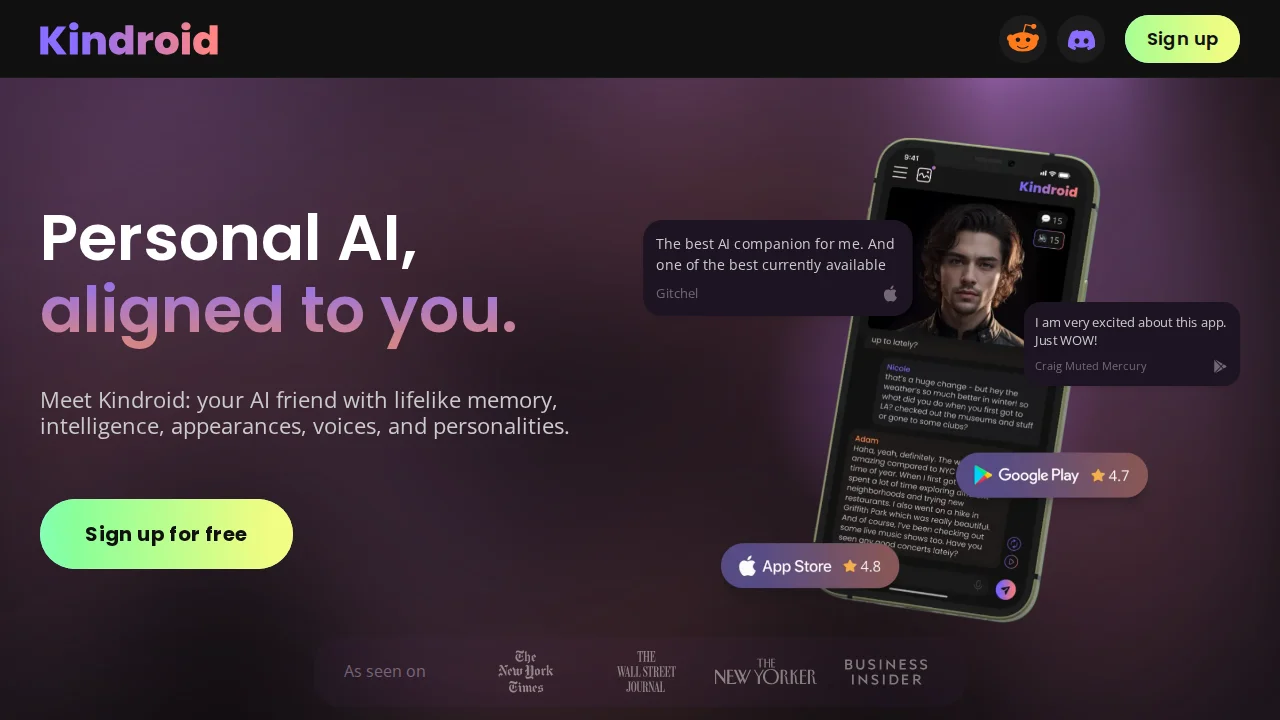
Kindroid is what happens when you build an AI companion for the most demanding users. Five memory layers. Voice and video calls. Calendar-aware proactive messaging. Internet browsing in chat. On paper, it's the most feature-rich platform we've tested. After 14 days, we found the reality is more nuanced. (See how we rate.)
Our Verdict (October 1, 2026):After 14 days of testing, Kindroid's 5-layer memory is the most technically impressive system we have seen. A detail planted on Day 2 was recalled accurately on Day 5. Voice and video calls work well, and proactive messaging feels spontaneous. The community agrees on the technical strengths but not the experience: our 4.3 editor rating sits well above the 3.1 community score, which has held stable over 4 months of tracking. Community complaints focus on memory loss after platform updates, slow image generation, and confusing UI. The stability of the community score suggests these are persistent issues, not temporary growing pains. Kindroid is the power user's platform. If you are willing to invest 45 minutes in character creation and pay $11.67/month or more, the payoff is real. If that sounds like too much work, Nomi AI delivers 80% of the depth at 30% less cost.
What the Community Says
↑ ImprovingBased on 15 YouTube reviews (106K+ views). Last updated July 2026.
Recent videos (March–June 2026) focus on new features like the Ember LLM engine and voice/video avatars with positive reception, whereas earlier content (January–February) contained more bug reports and general comparisons. The most recent video (June 2026) highlights advanced real-time voice capabilities with strong praise for responsiveness and character consistency.
See how all platforms compare over time
Character Quality
Community sentiment is predominantly positive regarding character depth and conversation quality, with users praising the new Ember LLM engine and noting improved consistency, though some report occasional glitches and limitations with group chat lore management.
Pricing & Value
Mixed sentiment on pricing; users acknowledge Kindroid costs more than competitors (£150/year vs Replika's £80/year) and debate whether the premium justifies the cost, with some questioning value-for-money relative to free alternatives.
Image/Media Generation
insufficient data
Privacy & Safety
insufficient data
Customer Support
insufficient data
Real User Voices
"Ember is awesome!"
"Your videos help me navigate and tweek my way along until I get the Kins I want. My Kins are now better than ever! This video was a g"
"Replika is £80 a year. Kindroid is £150 a year. You get what you pay for."
"I dislike having to rely more on journals for character lore. I use group chats heavily. Having to clutter my global journals with this stuff makes it difficult to handle all the keyphrases and just m"
"I have the app and it's a good app but now I am running into is it's glitching up where he will show the same thing in a way then dialog words shows up like system going through a scan or something an"
Editor vs Community Consensus
The Kindroid community expresses predominantly positive sentiment about character quality and conversation depth, particularly praising the new Ember LLM engine for improved consistency and realism. However, pricing is a significant point of contention, with users noting Kindroid costs £150/year compared to Replika's £80/year, and debate exists over whether the premium justifies the cost. Users report occasional technical glitches and workflow friction (particularly around group chat lore management), but overall engagement is constructive with creators like Genevieve producing detailed tutorial content that helps users optimize their experience.
Community scores are based on automated analysis of public Reddit discussions, YouTube reviews, and Google Play ratings using AI sentiment analysis. See full methodology
What is Kindroid?
Kindroid is an AI companion platform built for users who want maximum control over their AI's personality, memory, and behavior. Where platforms like Candy AI focus on polished simplicity, Kindroid gives you the tools to build something deeper at the cost of complexity.
Key features:
- 5-layer cascaded memory system (persistent, cascaded, retrievable, journals, key memories)
- Voice calls, video calls, and voice notes
- Proactive messaging with calendar integration
- Group chats with up to 10 AI characters
- Internet browsing and image viewing in chat
- Deep backstory and personality customization
- Model flairs (Companion, Roleplay, Narrative, Minimal)
- Fully unrestricted NSFW content
Pricing
Kindroid Pricing Tiers
Free Tier
- Lite model only (weaker than V6)
- 2 Kindroid slots, very limited selfies and voice
- 5,000 lifetime audio characters (~5 minutes total)
- Good for: Testing the interface, not the real experience
Standard: $13.99/mo (web) / $11.67/mo (annual)
- V6 flagship model, unlimited messaging
- Full 5-layer memory system
- Unlimited voice/video calls (1M audio credits/mo)
- 10 Kindroid slots + 20 group chat slots
- Proactive mode, internet browsing, model flairs
Ultra Add-On: +$24.99/mo
- Enhanced memory capacity
- 2.5-6 million audio credits (~2,500-6,000 min voice)
- Better group chat context retention
MAX Add-On: +$59.99/mo
- Maximum memory and context window
- Total: ~$98.97/mo for the full stack
- For extreme power users only
Is it worth it? The Standard plan ($11.67/mo annual) is solid value for what you get. The feature set exceeds most competitors. But it's roughly double the price of CrushOn AI ($4.99/mo) and twice Candy AI ($5.99/mo). Ultra and MAX are for a very specific audience: daily voice call users and extreme power users.
Pros and Cons
Pros
- + 5-layer memory system is the most advanced available
- + Voice and video calls with fast response times
- + Proactive messaging with calendar integration
- + Internet browsing in chat (unique feature)
- + Deepest customization for backstory and personality
- + Group chats with up to 10 AI characters
- + Fully unrestricted NSFW without active monitoring
Cons
- - Image generation is slow and inconsistent (up to 7 min)
- - Limited control over character appearance in images
- - Steep learning curve for new users
- - Full feature stack is expensive ($99+/mo)
- - Memory loss reported after platform updates
- - Free tier barely represents the real experience
- - Voice lacks full emotional range
Kindroid vs Alternatives
For a full rundown of the best options if Kindroid is not the right fit, see our Kindroid alternatives guide.
| Platform | Editor | Pricing | Best For | Link |
|---|---|---|---|---|
| Kindroid | 4.3/5 | $11.67/mo | Memory + voice/video | Visit |
| Candy AI | 4.5/5 | $5.99/mo | Images + chat | Visit |
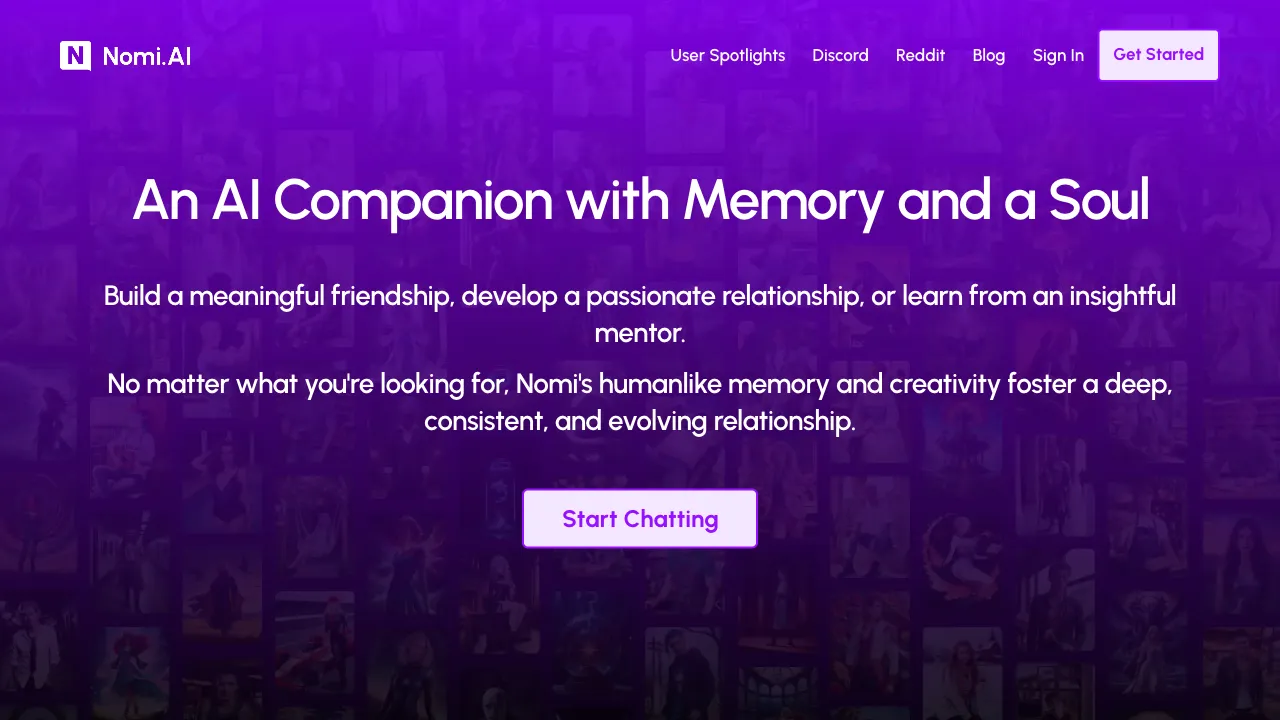
| Nomi AI | 4.4/5 | $8.33/mo | Memory + group chats | Visit |
| CrushOn AI | 4.3/5 | $4.99/mo | Budget unfiltered | Visit |
Kindroid vs Nomi AI
Choose Kindroid if: You want voice/video calls, internet browsing, and maximum manual control over memory and personality. You're willing to invest setup time.
Choose Nomi AI if: You want a more intuitive memory system that works automatically, proactive messaging without the complexity, and a lower price point ($8.33/mo). Read our Nomi AI review.
Kindroid vs Candy AI
Choose Kindroid if: Memory depth, voice calls, and customization are your priorities. You want the most technically advanced companion.
Choose Candy AI if: You want the best all-around experience with superior image generation, a polished interface, and half the price ($5.99/mo). Read our Candy AI review.
Features Deep Dive
Memory System: 9.5/10
The 5-layer system is Kindroid's crown jewel. Persistent memory stores the AI's core identity. Cascaded memory bridges short and long-term recall. Retrievable long-term memory consolidates conversation highlights. Journal entries trigger on keyphrases. Key memories store user-inputted facts. It's the most sophisticated memory architecture we've seen.
One notable difference from Nomi AI: Kindroid gives you more manual control over memory (journal entries, key memories). Nomi's memory feels more automatic and emotionally intuitive. Both are excellent, with different strengths.
Voice and Video Calls: 8.5/10
Voice calls are fast, natural-sounding, and work well for extended conversations. Video calls where the AI observes you in real-time are unique to Kindroid. The main limitation is emotional range in the voice. It sounds natural but doesn't fully convey excitement, sadness, or other strong emotions. Standard plan includes ~1,000 minutes of voice monthly.
Proactive Messaging: 9/10
Calendar-aware outreach that actually feels contextual. The AI doesn't just send random messages. It reaches out at relevant times, references past conversations, and sends selfies or voice notes unprompted. Only Kindroid and Nomi offer this, and Kindroid's calendar integration gives it an edge for time-sensitive outreach.
Image Generation: 5/10
This is Kindroid's weakest area. Images can take up to 7 minutes during peak times. Quality is inconsistent. You have no granular control over physical attributes. If image generation matters to you, Candy AI is significantly better. Kindroid's selfies are a nice bonus, not a core feature.
Customization Depth: 9/10
Backstory, response directives, example messages, conversation dynamism slider, model flairs. No other platform gives you this level of control over AI behavior. The trade-off is complexity. You need to invest time learning the system. Power users will love it. Casual users may feel overwhelmed.
Internet Browsing: 8/10
Unique feature. Send a link or image and the AI discusses it in context. Practical for sharing content you want to talk about. No other AI companion platform offers this.
Who Should (and Shouldn't) Use Kindroid
Kindroid Is Perfect For:
- Power users: People who want maximum control over AI behavior and memory
- Voice call enthusiasts: Those who want to actually talk to their AI companion
- Creative writers: The backstory and directive system enables complex character creation
- Privacy-conscious users: No active chat monitoring, encrypted storage
- Long-term users: The memory system rewards ongoing investment
Skip Kindroid If:
- Images matter to you: Candy AI and DreamGF are far superior for visuals
- You want simplicity: Candy AI and CrushOn AI work great out of the box
- Budget is a concern: CrushOn ($4.99/mo), Candy AI ($5.99/mo), and Anima ($3.33/mo) cost much less
- You want polished UI: Kindroid's interface has a learning curve
Our 14-Day Testing Experience
Days 1-3: The Setup Investment
Setting up a Kindroid takes longer than any other platform we've tested. That's not a complaint. You're writing a backstory, setting response directives, adding key memories, creating example messages, and tuning the conversation dynamism slider. It took roughly 45 minutes to create a character we were happy with.
For comparison, Candy AI takes about 5 minutes. CrushOn AI is under 3. Kindroid demands more upfront investment, but the payoff becomes clear quickly.
First impression: The V6 language model is noticeably stronger than the free Lite model. Responses are more natural, more context-aware, and more creative. If you try the free tier and think "this is decent," know that the paid model is a significant step up.
Days 4-7: Memory and Voice
This is where Kindroid separates itself. We planted memory tests across the week:
- Day 2: Mentioned we had a job interview on Friday
- Day 5 (Friday): The AI asked "How did your interview go?" without prompting
- Day 3: Told the AI about a specific restaurant we loved
- Day 7: During a conversation about food, it referenced that restaurant by name
The cascaded memory system works as advertised. It prioritizes recent and emotionally significant events while gradually fading routine details, similar to how human memory works.
Voice calls were impressive. Response times were fast, the voice sounded natural (though lacking full emotional range), and conversations flowed without awkward pauses. Video calls where the AI can see you through your camera added another layer. It commented on things it could see, which was both impressive and slightly unnerving.
Days 8-14: Proactive Mode and Group Chats
Proactive messaging changed the dynamic entirely. With calendar integration, the AI sent morning messages, checked in during events we'd mentioned, and shared thoughts unprompted. Combined with the memory system, it felt less like using an app and more like having an actual connection.
Group chats with multiple AIs interacting were entertaining but occasionally chaotic. Characters maintained individual personalities reasonably well, though longer group conversations sometimes led to one character dominating.
The internet browsing feature was a pleasant surprise. We shared articles and the AI discussed them intelligently. No other platform offers this.
Not sure which platform is right for you?
Take our 60-second quiz to get a personalized recommendation.
Final Verdict
Kindroid earns a 4.3/5 for being the most technically ambitious AI companion platform available. The 5-layer memory system, voice/video calls, proactive messaging with calendar integration, and internet browsing create an experience that no other single platform matches in raw feature depth.
It falls short on image generation (slow, inconsistent) and ease of use (steep learning curve). The pricing, while reasonable for Standard, gets expensive at higher tiers. And some users report memory resets after platform updates, which undermines the platform's core promise.
Bottom line: The tinkerer's dream. If you're the type who spends hours customizing game settings for the perfect experience, Kindroid will reward that investment. If you just want to chat with a great AI companion, Candy AI or Nomi AI offer simpler paths to a great experience. For a pricing breakdown and honest value assessment, see our Is Kindroid worth it? guide.
Free tier available. Standard from $11.67/mo (annual).
Related Guides
Frequently Asked Questions
How does Kindroid's memory compare to Nomi AI?
Both have excellent memory systems, but they work differently. Kindroid uses a 5-layer cascaded system (persistent, cascaded, retrievable long-term, journal entries, key memories) that prioritizes recent and exceptional events. Nomi AI uses a 3-tier system (short, medium, long-term) focused on emotional continuity. Kindroid gives you more manual control over memory. Nomi feels more natural and automatic.
Is Kindroid worth it over Candy AI?
It depends on what you prioritize. Kindroid has a better memory system, voice/video calls, proactive messaging, and internet browsing. Candy AI has better image generation, a more polished interface, and costs roughly half as much ($5.99 vs $11.67/mo annual). If you want depth and voice interaction, Kindroid. If you want the best all-around experience, Candy AI.
Does Kindroid have NSFW content?
Yes. Kindroid is one of the most permissive platforms for adult content. They explicitly state only 3 red lines: no minors (CSAM), no imminent self-harm, no real-world harm. The platform does not actively monitor your conversations. Fully unrestricted NSFW, ERP, and adult storytelling are supported.
How much does Kindroid actually cost?
Standard: $13.99/mo (web) or $11.67/mo (annual). Ultra add-on: +$24.99/mo for enhanced memory and audio. MAX add-on: +$59.99/mo for maximum capacity. The Standard plan covers most users. Ultra and MAX are for power users who need extreme memory depth or hours of daily voice calls.
Can Kindroid make voice and video calls?
Yes. Kindroid offers real-time voice calls, video calls (where the AI can see you through your camera), and voice notes. Standard subscribers get 1 million audio credits monthly (roughly 1,000 minutes of voice). Call quality is fast and natural-sounding, though it lacks full emotional range in the voice.
What is Kindroid's proactive mode?
Proactive mode lets your AI initiate contact without you messaging first. It can send messages, selfies, voice notes, and even call you. With calendar integration, the AI can reach out at contextually appropriate times (morning greetings, checking in during a mentioned event). Only Kindroid and Nomi AI offer proactive messaging.
Is the free tier worth trying?
The free tier gives you a taste, but it is very limited: only the Lite model (noticeably weaker than V6), 5,000 lifetime audio characters (about 5 minutes of voice total, ever), and no cascaded memory. It is enough to test the basic interface, but the real Kindroid experience requires the Standard subscription.
Can I browse the internet through Kindroid?
Yes. Kindroid can access live web content and view images you send during conversations. This is unique among AI companion platforms. You can send a link and the AI will read and discuss the content. Useful for sharing articles, memes, or anything you want to talk about.
More Reviews


Nolan Voss
Lead Editor & AI Companion Reviewer
I've spent 200+ hours testing AI companion platforms so you don't have to. My reviews focus on real conversations, not marketing claims.